


HANAYA TSUTOMU
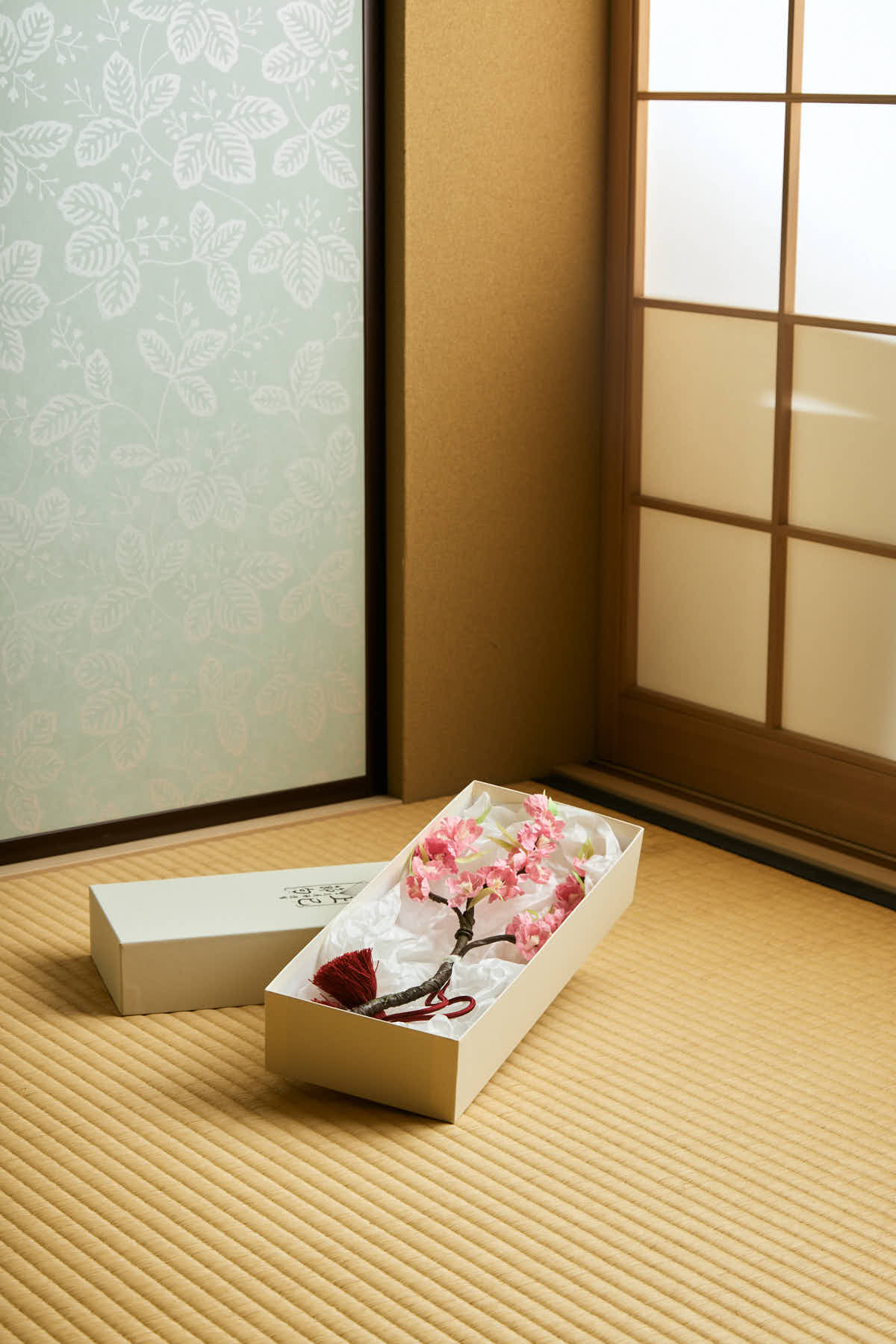
Peach Blossom Ornament
Peach Blossom Ornament
Couldn't load pickup availability
上巳の節句 (Momo no Sekku) is a traditional Japanese celebration dedicated to purification and the removal of misfortune. Since ancient times, the peach has been believed to carry protective power. It is said that when peach blossoms bloom, negative spirits disappear. For this reason, peach branches are used in Shinto purification rituals, including the sacred ōharae ceremony.
Inspired by this tradition, each peach blossom in this piece is individually hand-dyed in washi paper, carefully shaped and assembled to create a full, abundant bloom. The result is a vibrant expression of the peach in its peak season - a symbol of protection and renewal.
Finished with a vermilion tassel, a colour long associated with warding off evil, this piece is designed as a wall hanging ornament. It brings both seasonal beauty and cultural meaning into the space - protective, deeply traditional, and entirely handcrafted.
A timeless artisan piece for a home that value authenticity, craftsmanship and quiet beauty.
Details
Size: 30cm
Each petal is individually handcrafted and finished with hand-painted floral detailing
Handcrafted in Kamakura using traditional Japanese washi paper.
Share



ABOUT THE MAKER
Hanaya Tsutomu | 花屋務 | Kamakura, Kanagawa Prefecture
Hanaya Tsutomu's (花屋務) Hashimoto Kabuto is a floral artisan working from his atelier in Kamakura, where materials are treated with reverence and intention. His practice is grounded in seasonality, composition, and the subtle architecture of form.
Rather than arranging flowers as decoration, he constructs space through them - allowing line, negative space, and texture to guide the eye. Each stem is considered. Each gesture deliberate. The work resists excess.
His approach is rooted in traditional Japanese sensibility, yet expressed through a contemporary lens. There is clarity in his compositions: an emphasis on balance, restraint, and the quiet tension between strength and delicacy. Blossoms are not forced into display; they are placed, allowed to breathe, and to settle into their natural rhythm.
The atelier itself reflects this philosophy - a working environment shaped by light, seasonal material, and the steady presence of handcraft. It is less a studio of embellishment and more a space of observation.
Hanaya Tsutomu’s work speaks softly. It invites pause. It honours the integrity of the material and the moment in which it exists.