


NAKAHARA KEIHO ATELIER
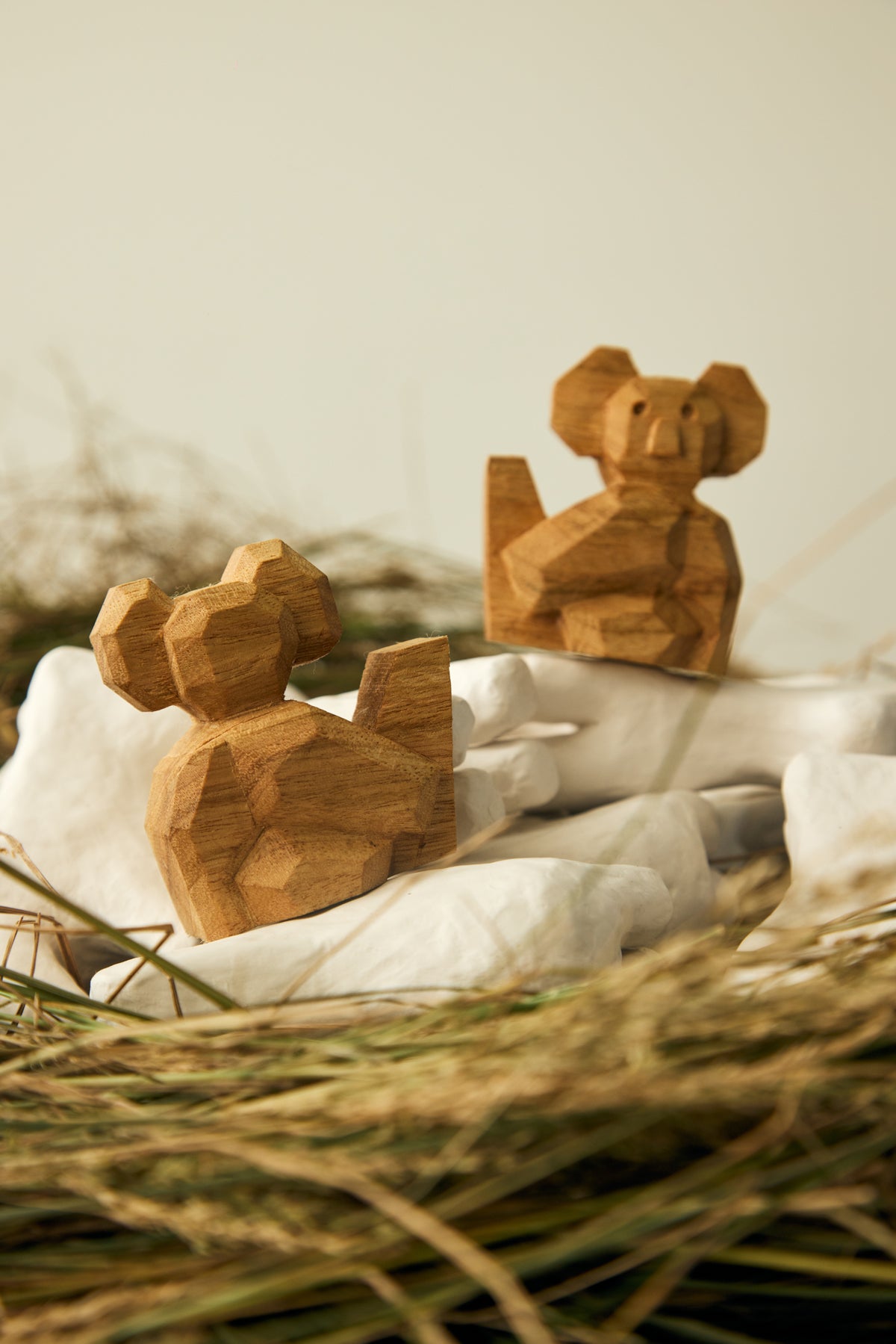
Hand Carved Wooden Figurine
Hand Carved Wooden Figurine
Couldn't load pickup availability
Produced in a limited run of 10 pieces in each motif, each piece is individually carved, numbered and shaped entirely by hand by Nakahara Keiho and his son in his small family workshop in Japan. Because every carving is made slowly and intentionally, no two are ever the same - each one is numbered and carries its own character, grain, and the natural camphor fragrance of Kusunoki wood.
Over time, the fragrance may soften and the wood will require rehydrating, to refresh it, lightly mist with water and allow it to rest.
Share



ABOUT THE MAKER
Nakahara Keiho Atelier | 中原恵峰工房 | Kashima City, Saga Prefecture
For more than seventy years, Nakahara Keiho has carved the oni masks of Men-furyū, a masked dance from south-western Saga traditionally performed to pray for good harvests and rain. Born in 1938 in Takaki, Nagasaki, he began his apprenticeship at fifteen under the carver Komori Keiun. In 1975 he opened his own workshop in Kashima, and he has since carved masks for furyū groups across the region. His work received a national traditional crafts award in 2012, and in 2023 his mask-making was registered as an intangible folk cultural property of Saga Prefecture.
The masks come as male and female. The male keeps his mouth firmly shut and wears long horns, guarding against misfortune. The female opens hers wide, tongue extended, to call good fortune in. Keiho carves in camphor and chooses each block for its symmetrical grain. The timber dries for two to three years, is milled, then dries for another two to three, so roughly five years pass before the first cut. He works with around a hundred chisels and says the eyes are the hardest part, because lifting the corner by two or three millimetres changes the whole face.
His son Hirokazu now works beside him, having left a corporate career to learn the craft.
For Simply Native, Keiho has carved our five tea-history stamps that you'll see in some of our original tea tins, a wattle and waratah incense container and a wagashi mould of the Opera House and Harbour Bridge for a private client.